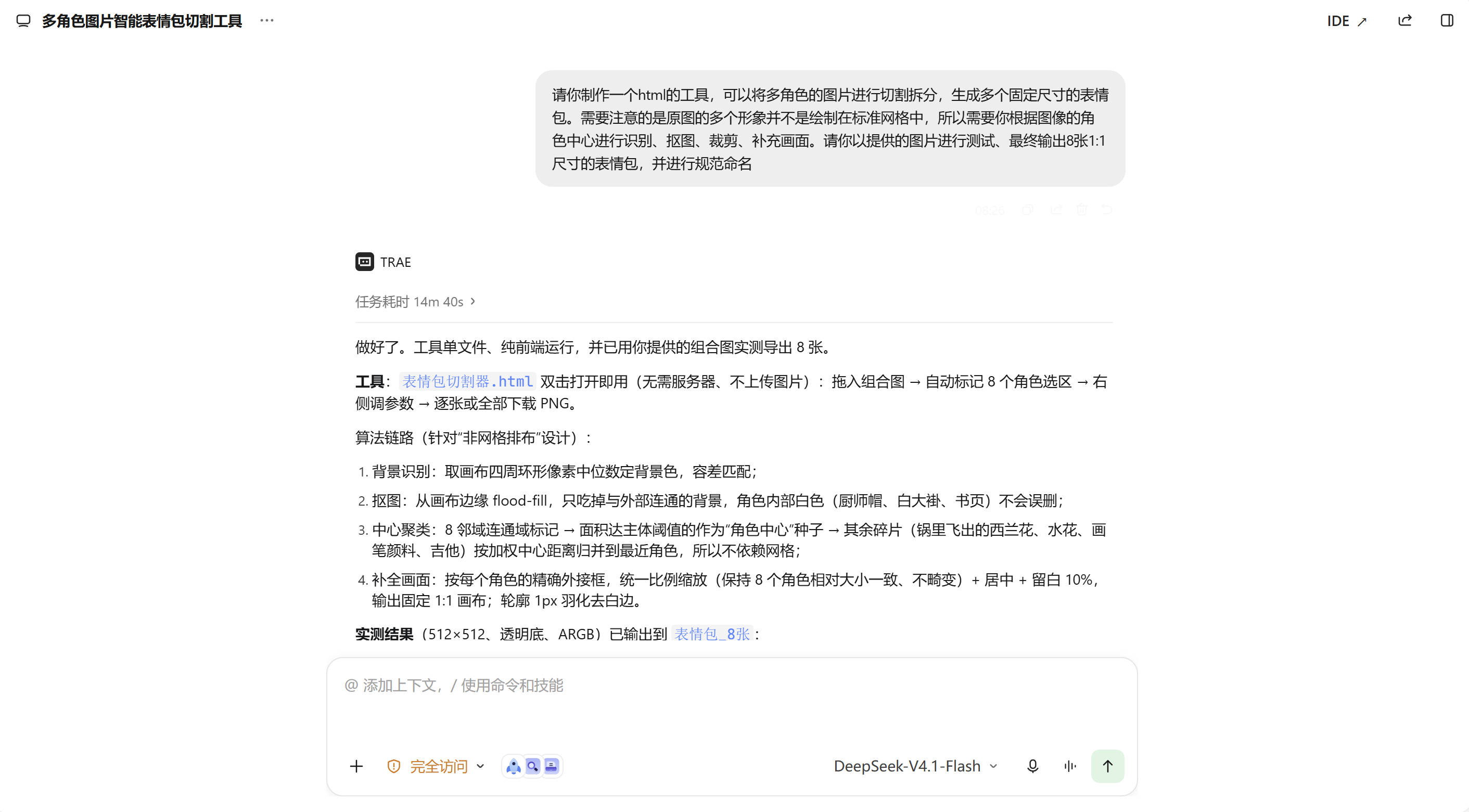
一、创作缘由
现在AI生成的IP或表情包看起来很平,虽然挑不出来毛病,但看多了总觉得内容都差不多,缺少一些灵魂和张力;
另一方面,我自己的想法是既然TRAE打算深入到更多的行业之中,那么需要一些与之配套的职业形象,增进亲切感。
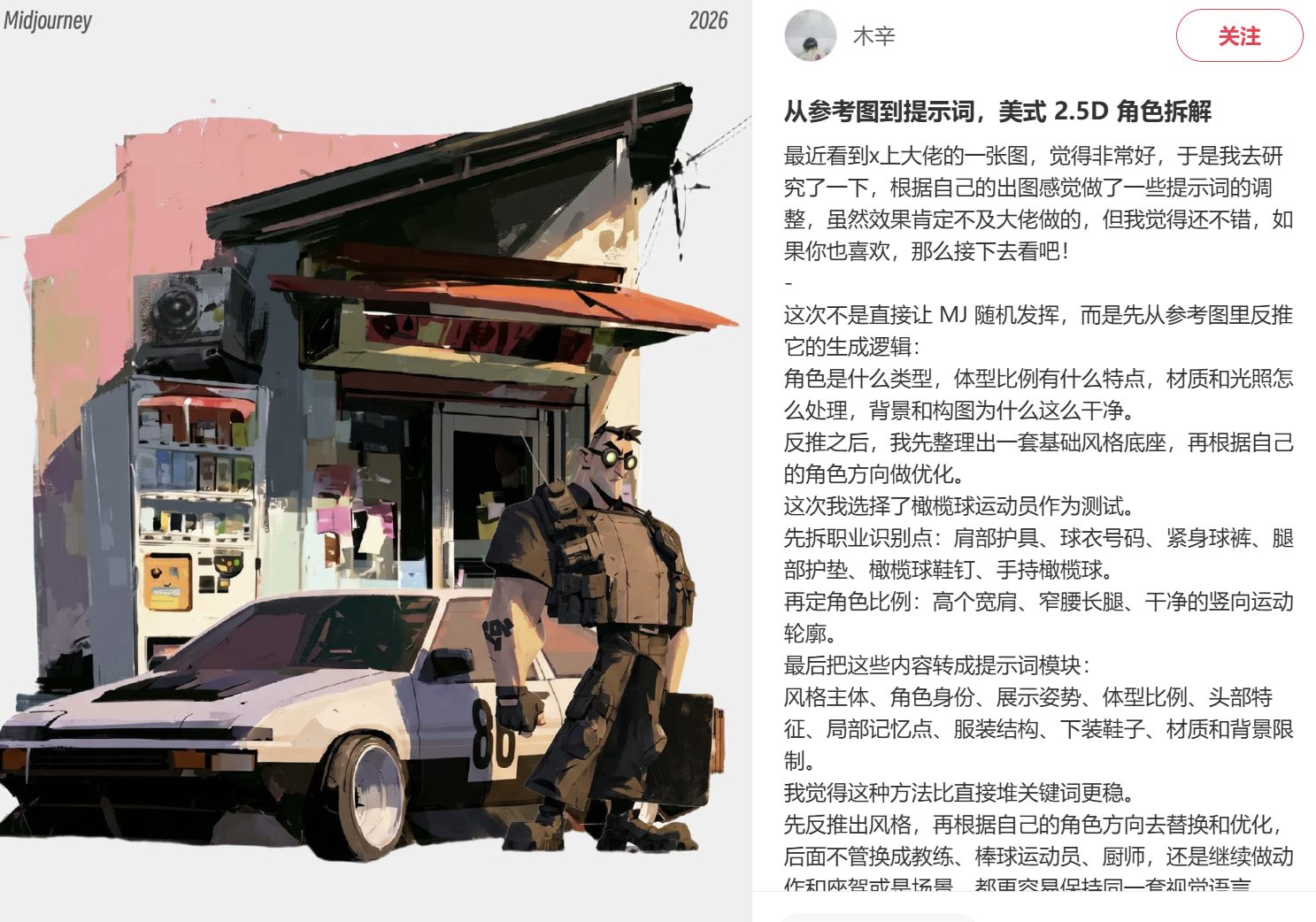
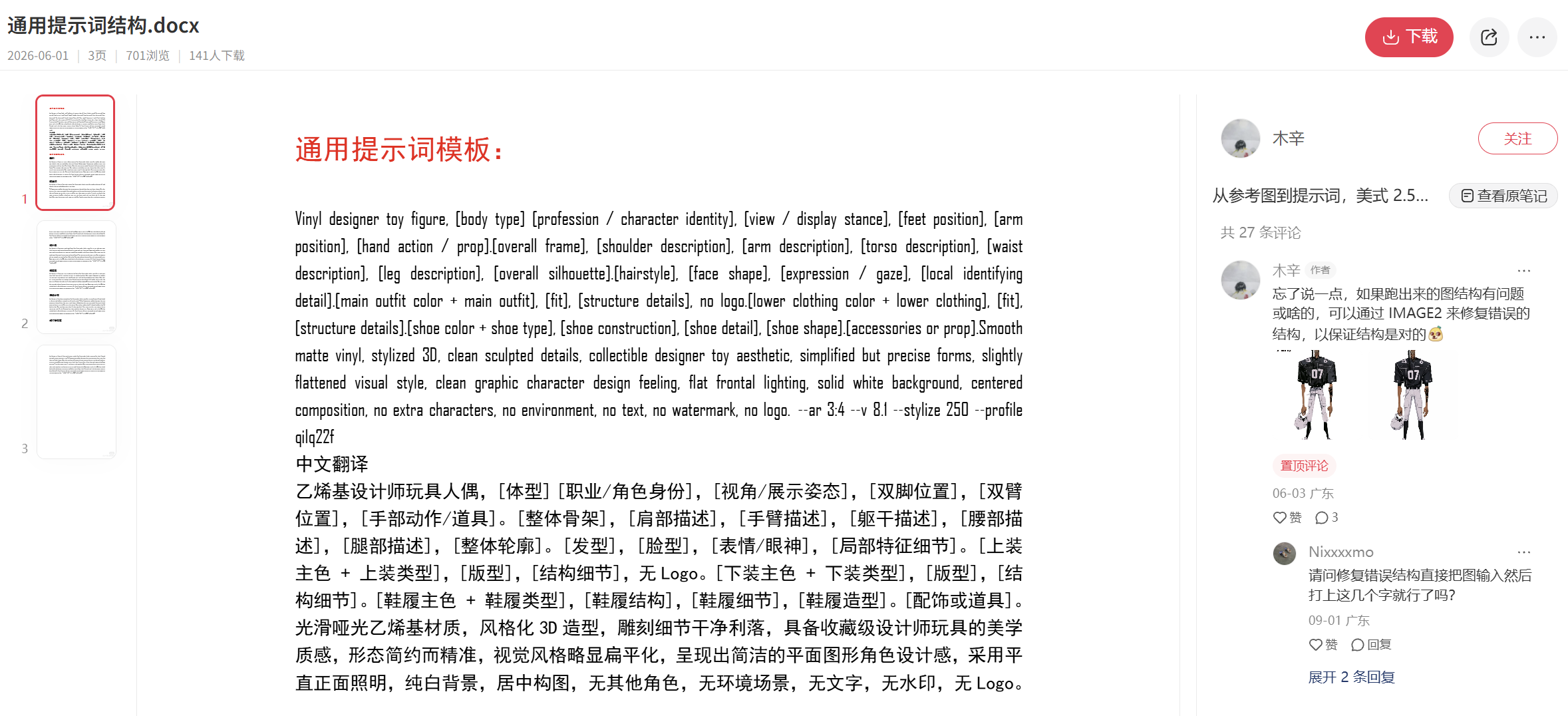
我在活动期间刷小红书的时候,发现了@木辛 博主分享的创作图片很有特点,也提供的通用提示词,于是以此为风格基调的基础,结合TRAE宝的形象进行了创作。
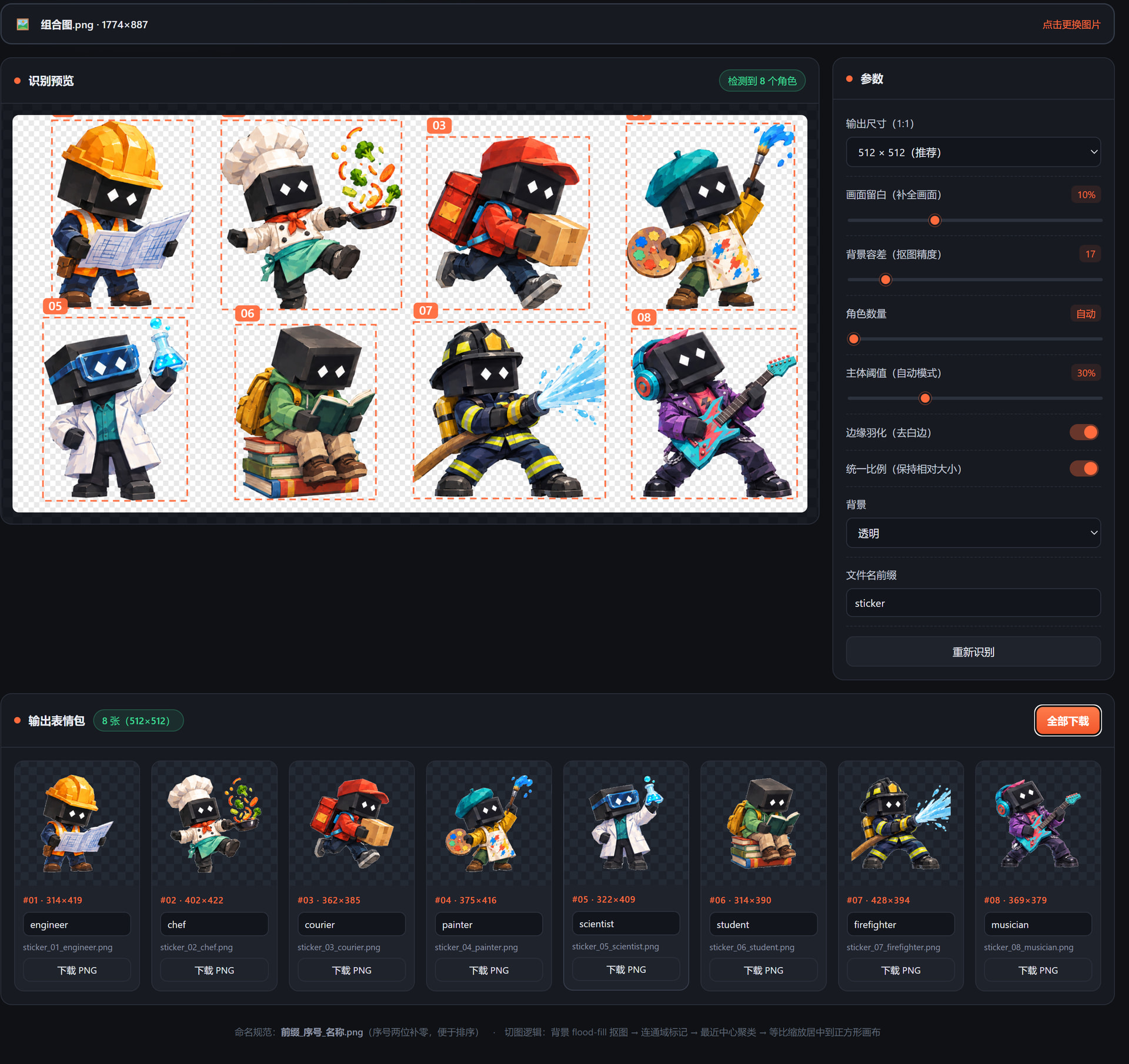
二、成果展示
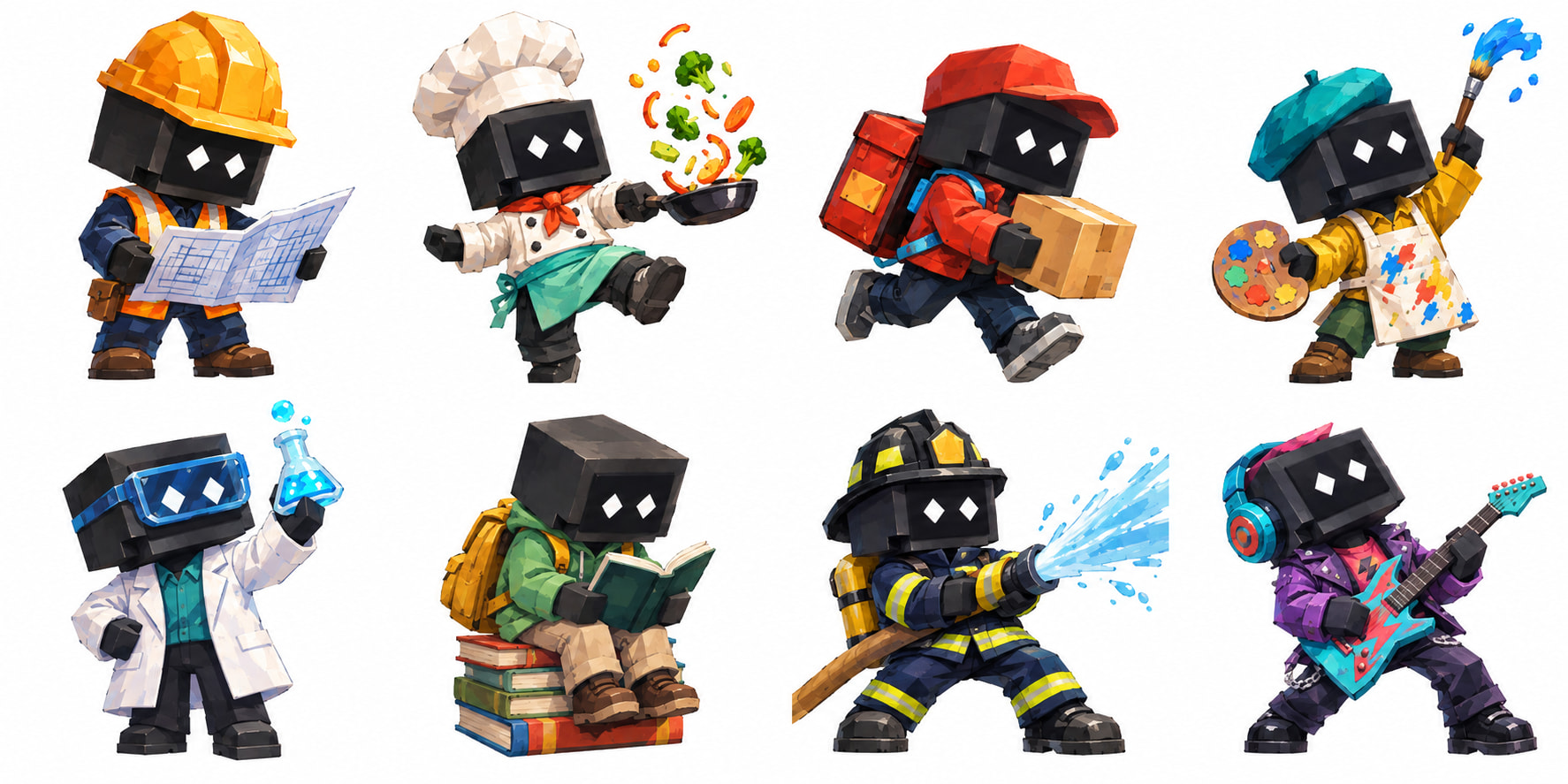

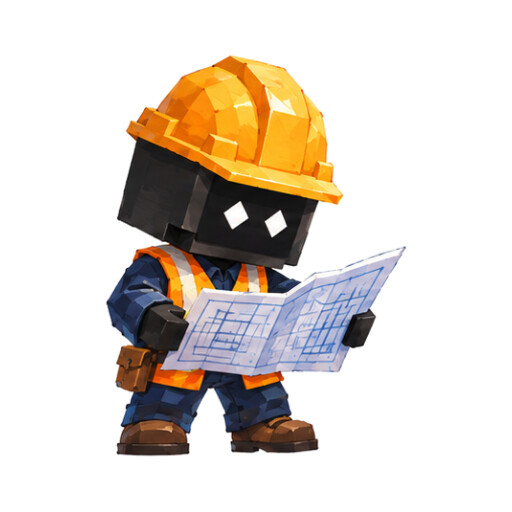

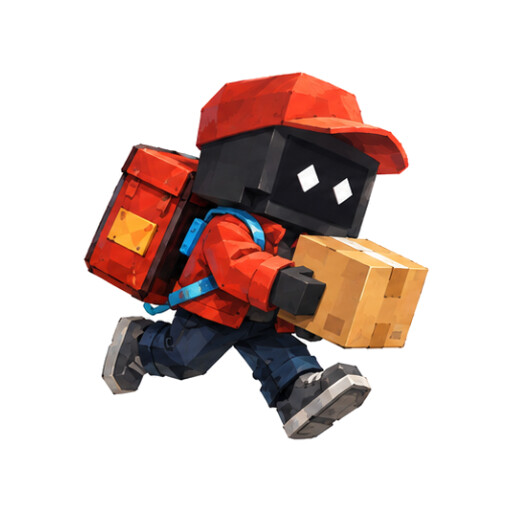
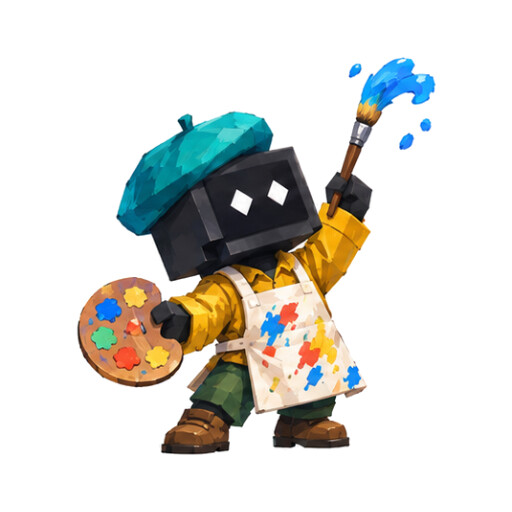


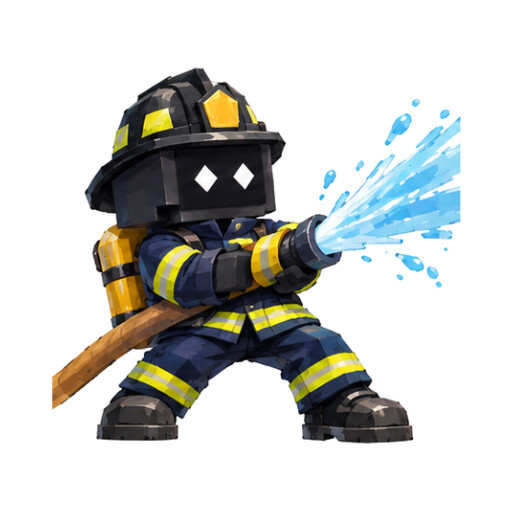
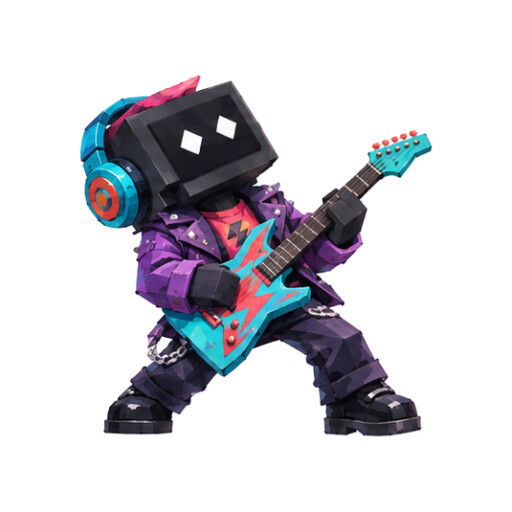


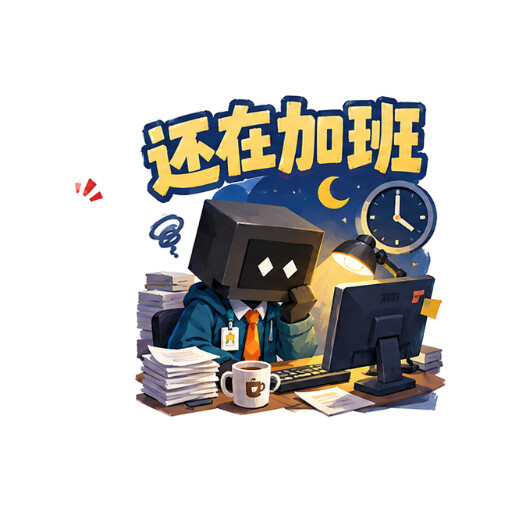





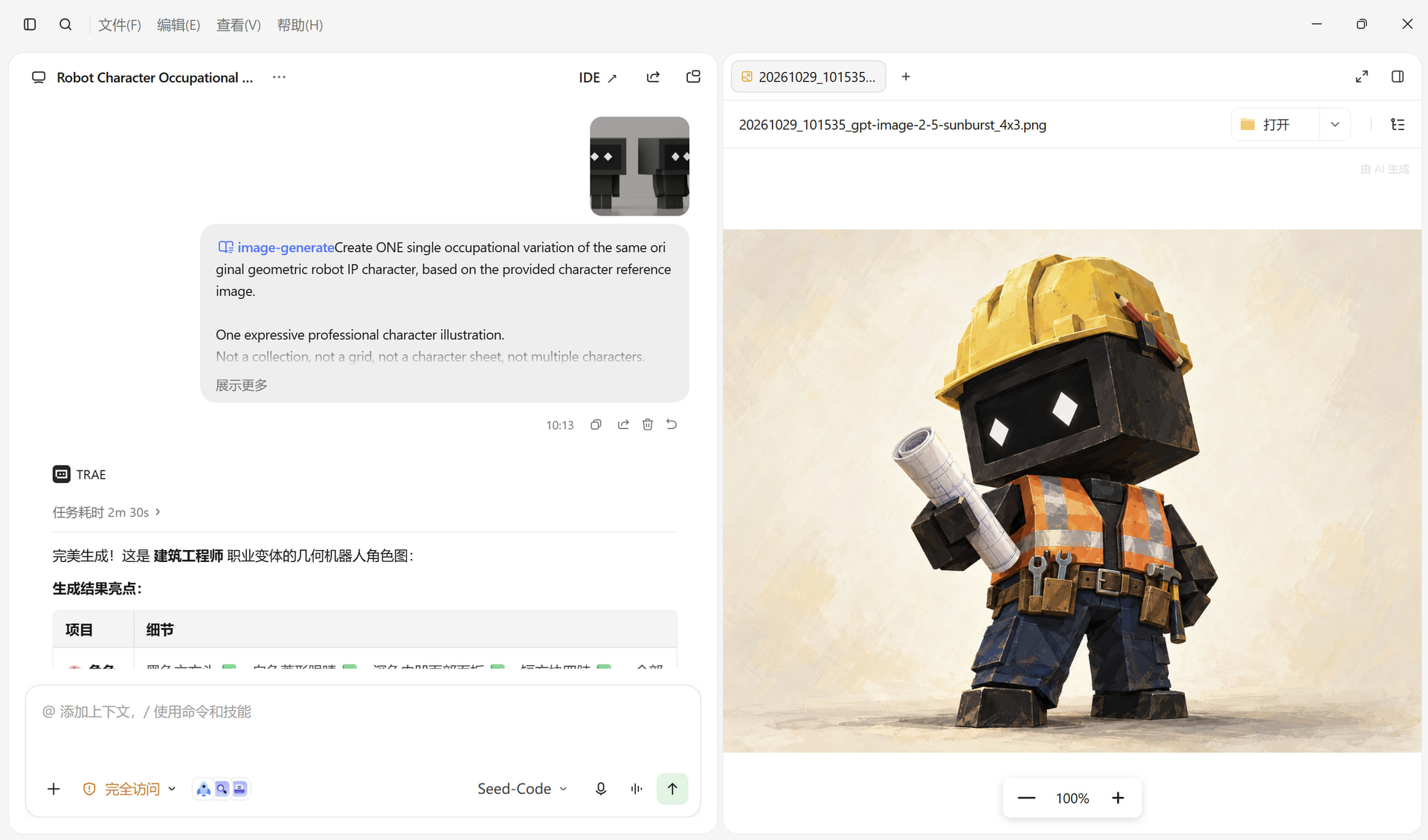
三、提示词(单图)
Create ONE single occupational variation of the same original geometric robot IP character, based on the provided character reference image.

One expressive professional character illustration.
Not a collection, not a grid, not a character sheet, not multiple characters.
Only one single robot character must appear in the final image.

CHARACTER IDENTITY:

The single character must preserve the exact same recognizable geometric robot identity.

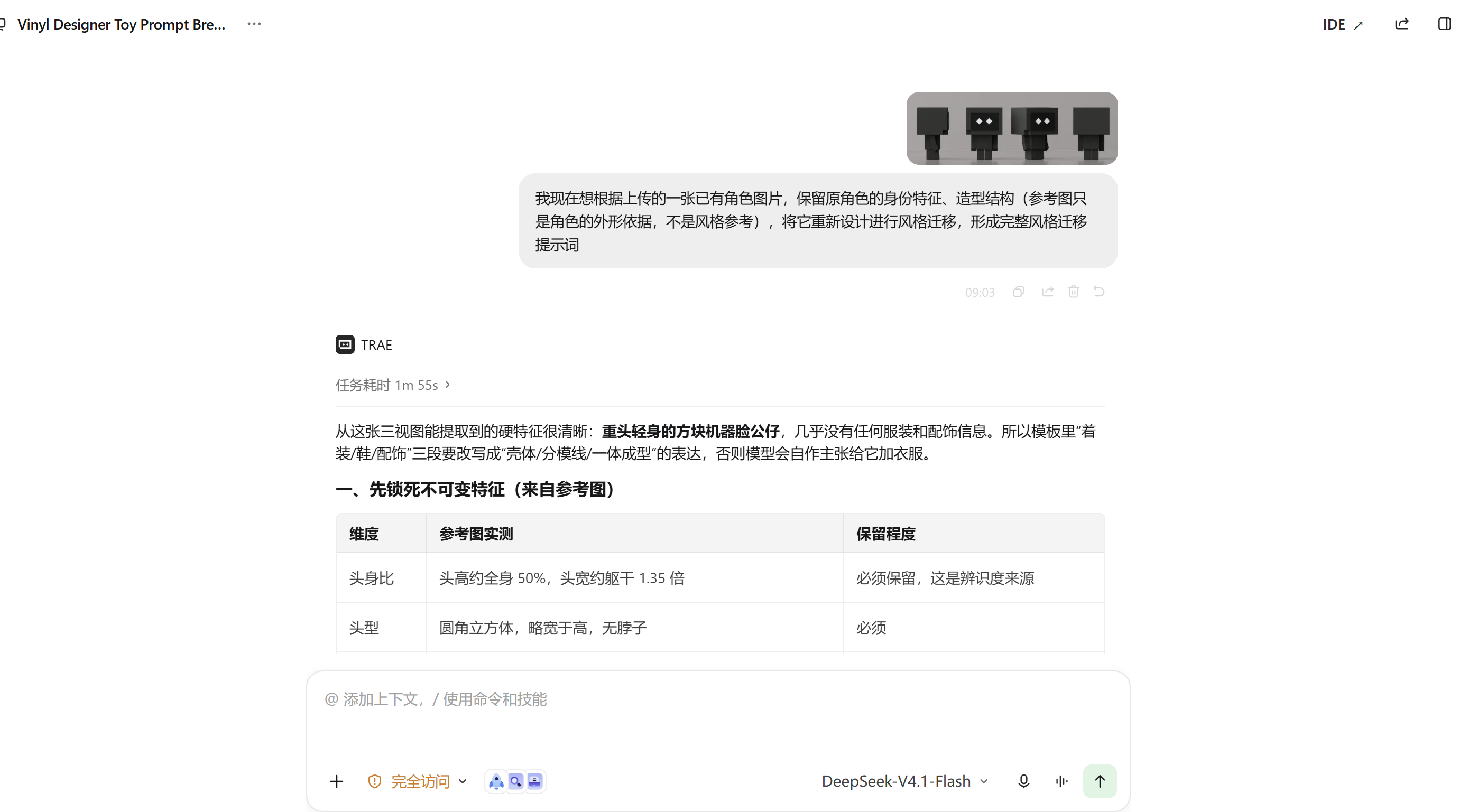
Oversized cubic black head, compact rectangular torso, short block-shaped arms, short rectangular legs, dark recessed rectangular facial panel, and two distinctive white diamond-shaped eyes.

Maintain the original robot's iconic head-to-body proportions, compact geometric anatomy, and minimalist facial design.

The robot's original black body remains consistent.

The black cubic head and white diamond-shaped eyes must remain immediately recognizable regardless of profession, costume, pose, or camera angle.

Do not humanize the robot, change its head shape, add a mouth, add eyebrows, introduce human facial anatomy, or redesign its fundamental geometric structure.

The reference image determines character identity only, not the final rendering style.

OCCUPATIONAL CHARACTER:

[Paste exactly ONE complete occupational block from the original list here: construction engineer, chef, delivery worker, painter, scientist, student, firefighter, or rock musician.
Only one profession.
Preserve that chosen occupation's costume, color palette, professional props, emotional intention, body pose, eye direction, camera angle, shot size, composition, and action description exactly.]

PROFESSIONAL COSTUME ADAPTATION:

The professional costume must be specifically adapted to the original robot's compact cubic anatomy.

Professional clothing must conform naturally to its rectangular torso, short block-shaped arms, and short geometric legs.

The clothing should visually wrap around the robot's existing structure rather than transforming it into a human body.

Preserve the original oversized cubic head and recognizable geometric silhouette.

Professional hats and head accessories must fit naturally onto the cubic head without changing its fundamental shape.

Professional uniform elements should remain clearly readable through simplified graphic clothing shapes, bold color planes, and carefully controlled structural details.

All professional props must be appropriately scaled to the robot's compact proportions.

Avoid realistic human hands, human body anatomy, organic facial features, and unnecessarily complicated garment structures.

DISTINCT OCCUPATIONAL COLOR DESIGN:

Use the chosen occupation's clearly differentiated and recognizable color identity.

Use profession-specific dominant colors, contrasting secondary colors, and carefully selected accent colors.

Use saturated but sophisticated color relationships.

Use rich painterly midtones, bold shadow colors, carefully controlled highlights, and subtle complementary color variations.

Colors must feel vibrant, harmonious, professionally art-directed, and visually distinct.

Do not recolor the original black robot head into different colors.

The professional clothing and accessories should provide the majority of the color variation.

EMOTIONAL EXPRESSION AND BODY LANGUAGE:

Communicate the chosen occupation's distinct emotional intention through posture, eye direction, gesture, movement, and interaction with professional props.

Preserve the original white diamond-shaped eyes.

Allow the eyes to communicate emotion through gaze direction, orientation, spacing, and subtle expressive emphasis.

Do not add human mouths, eyebrows, noses, or facial anatomy.

Use head tilts, body angles, weight distribution, and gestures to reinforce emotional storytelling.

DYNAMIC ACTION AND ANIMATION PRINCIPLES:

Apply professional character animation principles.

Strong line of action, anticipation, follow-through, weight shifting, balance, asymmetrical posing, directional momentum, and expressive silhouettes.

Capture the most visually meaningful moment of the chosen professional activity.

Use expressive standing poses when appropriate.

Use energetic movement when the character's emotional narrative requires it.

Avoid stiff symmetrical positioning and mechanical character presentation.

Maintain the robot's rigid cubic anatomy while allowing expressive movement through rotation, articulation, posture, and controlled perspective.

AUTOMATIC POSE AND CAMERA MATCHING:

Automatically match the chosen character's emotional intention and professional action with the most appropriate body pose, eye direction, camera angle, shot size, and composition.

Emotional storytelling determines the action.

The action determines the body mechanics and pose.

The pose determines the most expressive camera angle.

The camera angle determines the framing and composition.

Use camera direction to enhance emotional clarity and dynamic visual storytelling.

Allow frontal views, three-quarter views, side views, rear views, high-angle views, low-angle views, and overhead perspectives when appropriate.

Use full-body shots for energetic physical movement.

Use medium shots for professional activities involving hand gestures and props.

Use close-ups when facial or eye expression carries the emotional meaning.

Use dynamic diagonal compositions when movement, force, or emotional intensity requires it.

PAINTERLY ART STYLE:

Premium stylized digital painterly character illustration.

Expressive semi-impasto digital painting, bold planar color blocking, strong geometric volumetric construction, graphic light and shadow separation.

Confident broad brushstrokes, textured painterly edges, angular sculptural forms, rich tonal transitions, layered digital paint, simplified but powerful color masses.

Strong three-dimensional form expressed through painterly color construction rather than physical 3D rendering.

Large clearly separated color planes, bold graphic shadows, angular highlights, controlled painterly transitions.

Expressive hand-painted surface quality, visible directional brushstrokes, sophisticated value structure, selective sharp edges and soft painterly blending.

Stylized character concept art aesthetic, exaggerated geometric proportions, expressive visual storytelling, strong silhouette readability.

Rich but controlled color variation, dynamic warm-cool relationships, subtle reflected light, carefully designed shadow masses.

Use broad angular brushstrokes to describe the volume of the robot's cubic head, clothing, accessories, and props.

Preserve the clear geometric structure of the robot while rendering all surfaces through painterly color shapes.

The final image should resemble a professionally painted stylized character concept illustration.

Not a 3D render, not a vinyl toy, not a plastic figurine, not CGI, not photorealistic, not smooth vector artwork.

Avoid excessive smooth gradients, plastic reflections, realistic surface shaders, and physically based rendering.

STYLE CONSISTENCY:

The single illustration must use the same professional stylized digital painting technique described above.

Maintain consistent brushwork, lighting philosophy, geometric form construction, painterly edge treatment, and overall artistic quality.

The character reference determines the robot's original identity.

The style reference determines the painterly rendering language.

The occupational description determines costume, props, emotion, and action.

The final image must prioritize the specified digital painterly illustration style over the original reference image's rendering appearance.

LAYOUT AND PRESENTATION:

Exactly ONE distinct occupational robot character illustration.

Clean single-character composition with generous negative space.

The single character may be placed dynamically, with varied pose, body orientation, camera angle, and movement.

Keep important character features, costume, gestures, and professional props clearly visible.

The robot must retain the iconic black cubic head and white diamond-shaped eyes.

Use a clean warm off-white background with subtle painterly contact shadows and minimal ground texture.

No detailed environment, no decorative panels, no borders, no text, no watermark, no logo.

No grid, no multiple characters, no character sheet layout, no collection layout.

One profession, one distinctive color palette, one expressive pose, one consistent geometric robot IP identity, unified premium stylized digital painterly illustration style.

--ar 4:3 --stylize 250
生图模型建议:mj v8.1 \gpt image 2.5\seedream5.0 pro
提示词的结构包括:职业身份 → 情绪内容 → 动作设计 → 蓄力与动势 → 镜头角度 → 景别构图;
核心原则是:让镜头服务情绪
四、技巧与踩坑
- 为了确保TRAE宝的主体形象还原度更好,可以前期先让AI理解清楚角色的特征,越细致越好
- 表情包好看的诀窍是要有张力,主体特征一致的前提下尽可能保证每个图片的表情、姿态、视图都能够有所区别
- 要省积分可以一次性生成多图,但是要注意通过在提示词增加统一画布规格、 强制留白、 控制角色占比等方式对生产规格进行约束;也可以通过上传网格模板作为构图参考图的方式,让AI尽量按照格子模型生图
五、TRAE的使用
感谢表情包之神 @CC3 提供的三视图,省了不少事情
-提示词拆解/反推/修改
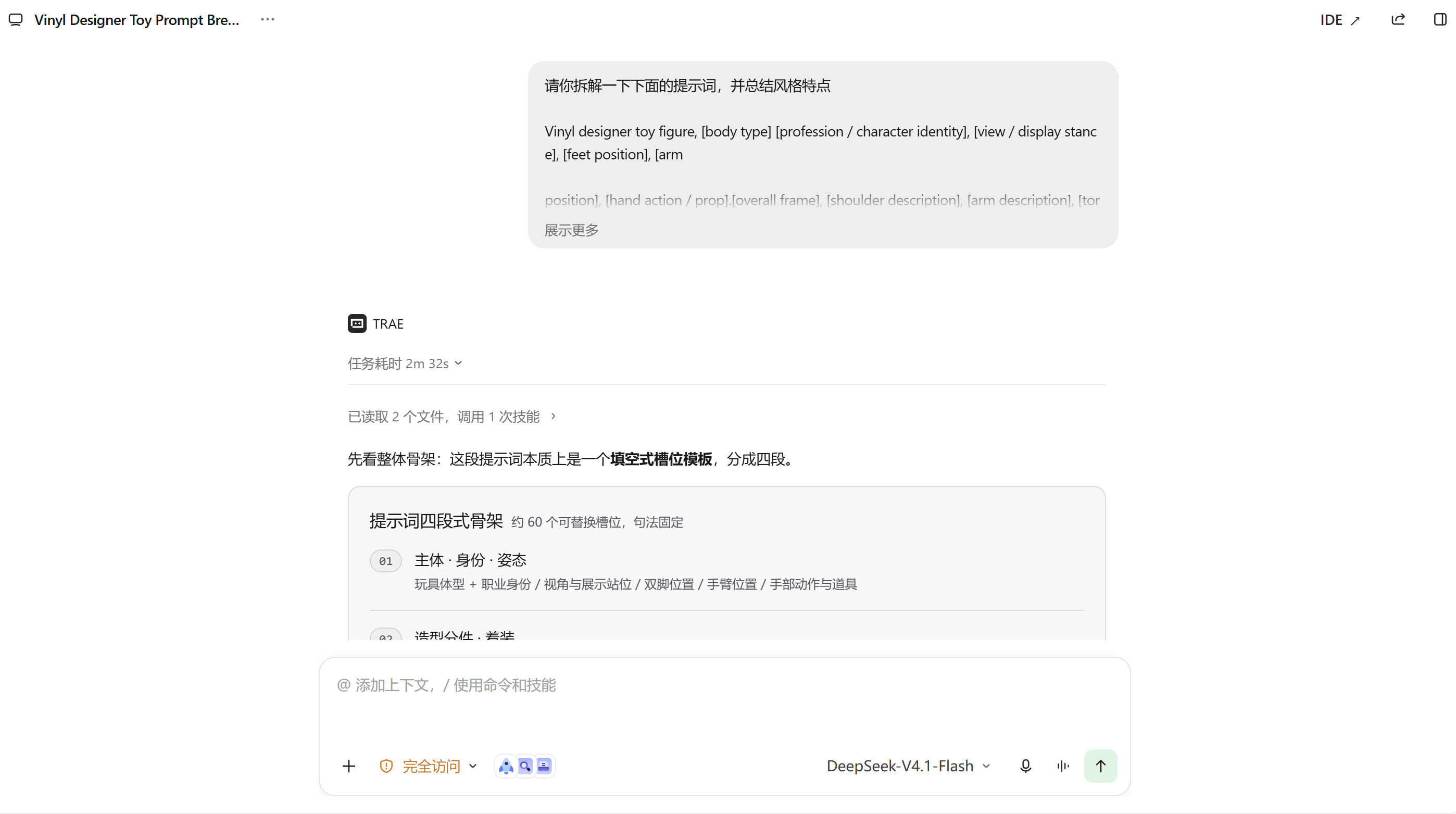
-图片生成(skill+api)

-制作图片切割工具